
Alcohol Capture
Alcohol Capture, originally developed as a native app, is now a progressive web app (PWA) that allows alcohol consumption behaviour to be recorded in real time. Researchers receive dedicated accounts and can run multiple studies in parallel, with flexibility over study duration and the nature and timing of feedback provided to participants. A researcher dashboard supports monitoring of participant compliance and the sending of notifications.
Originally designed by Dr Antoinette Poulton and developed in collaboration with Ant Development Studios, the app was later converted to a PWA by CPB Solutions. It has been shown to be a valid and reliable measure of alcohol intake, with high participant compliance and low reactivity over time low (Poulton et al., 2018, 2019).
The app is pre-programmed with a comprehensive list of commonly available alcoholic drinks. For each beverage, users can select from a range of serving sizes that reflect those sold in licensed venues and retail outlets across Australia.
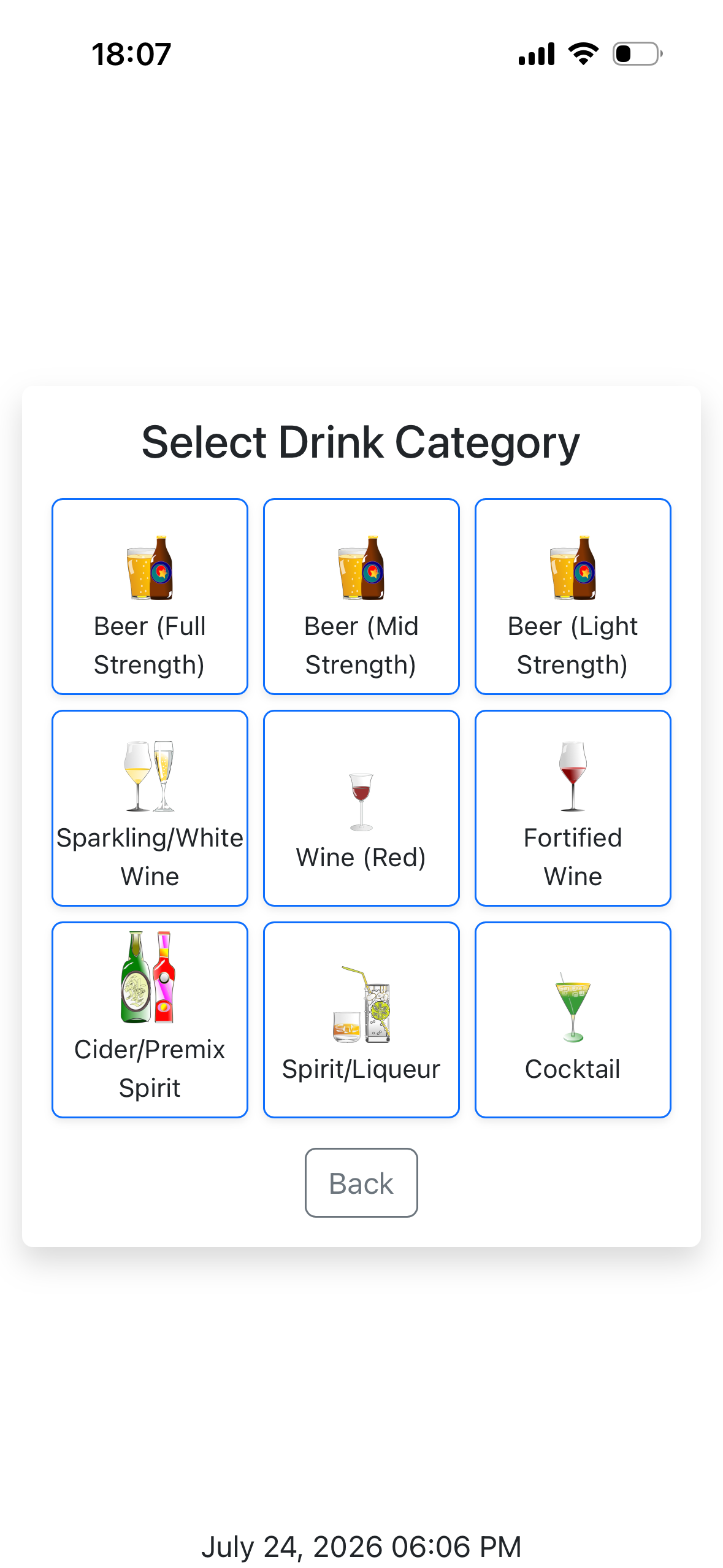
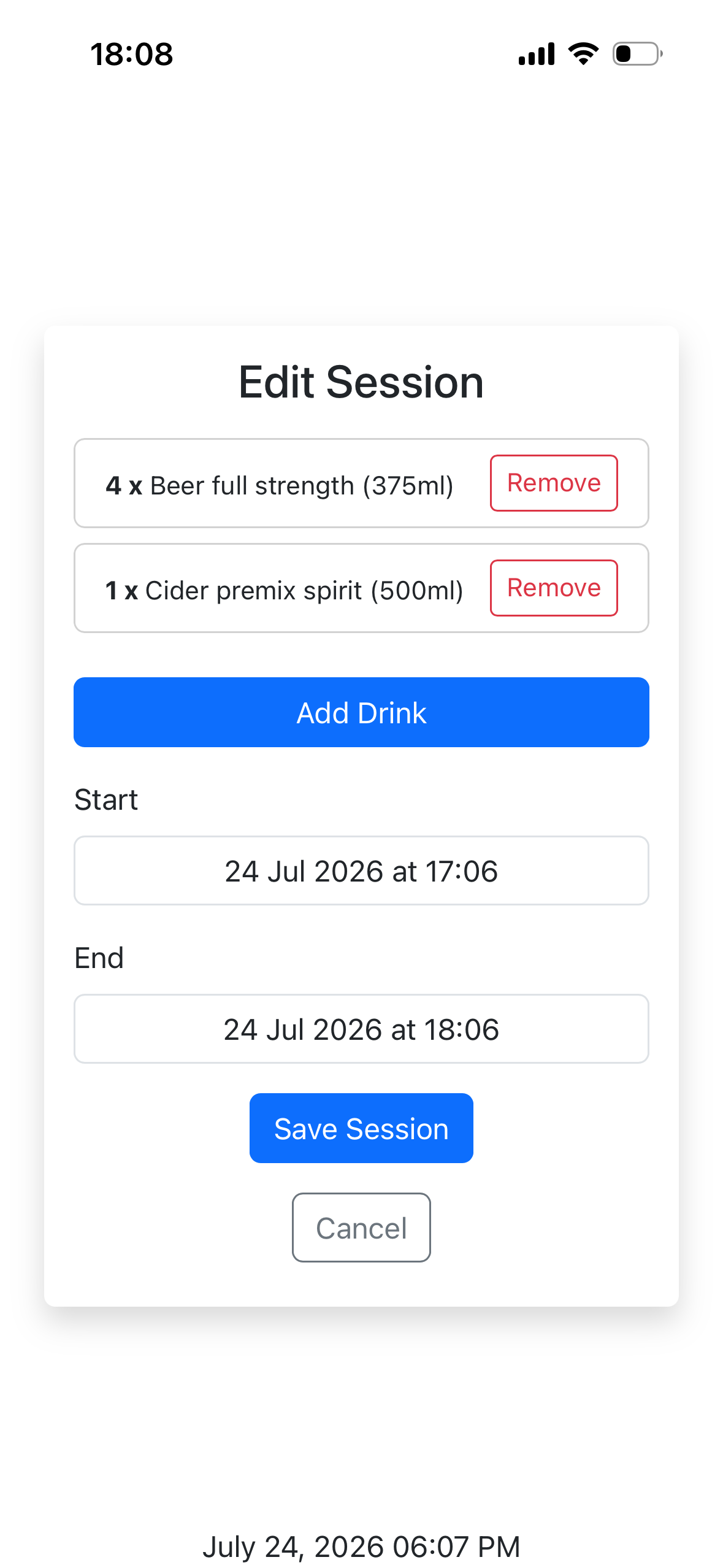
Alcohol intake data can be submitted at any time, either in response to twice daily notifications or while drinking. Users can see a history of their submission dates and times, but not their specific drinking data.
Research
Alcohol Capture (previously called CNLab-A app) has been the subject of methodological investigations:
- Poulton, A., Pan, J., Bruns, L. R., Sinnott, R. O., & Hester, R. (2019). A smartphone app to assess alcohol consumption behavior: Development, compliance, and reactivity. JMIR mHealth and uHealth, 7(3), e11157
- Poulton, A., Pan, J., Bruns Jr, L. R., Sinnott, R. O., & Hester, R. (2018). Assessment of alcohol intake: Retrospective measures versus a smartphone application. Addictive Behaviors, 83, 35-41
The app has been integral to empirical studies in the area of alcohol use consequences, cognition, and vulnerability for transition to alcohol use disorder:
- Poulton, A., Eastwood, O., Bruns Jr, L. R., Sinnott, R. O., & Hester, R. (2022). Addressing methodological issues in a study of impulsivity and vulnerability for transition to alcohol use disorder. Alcohol: Clinical and Experimental Research, 46(2), 262-276
- Poulton, A., Mata, A., Pan, J., Bruns, L. R., Sinnott, R. O., & Hester, R. (2019). Predictors of adverse alcohol use consequences among tertiary students. Alcohol: Clinical and Experimental Research, 43(5), 877-887
The app has been employed as a brief intervention designed to reduce alcohol intake. This proof-of-concept study showed that when young adults are provided with individualised information about their level of consumption and associated potential harmful consequences, they reduce alcohol intake by up to 35%:
- Poulton, A., Dali, G., McGinness, C., Clarke, S., Turner, T., Liu, J., Giggins, J., Marcuson, R., & Hester, R. (2023). Impact of personalised alcohol intake and cognitive feedback on alcohol use behaviour in hazardous drinkers: A quasi-randomised trial. Alcohol: Clinical and Experimental Research, 47(7), 1377-1389.
More recently, Alcohol Capture has been integral to research showing how real-time fluctuations in executive function (response inhibition and working memory) – measured via the CheckCog app – predict drinking.
- Dali, G., Chew, C., Tran, R., van der Tang, H. F., Wertiechowski, H., Hester, R., & Poulton, A. (2026). Linking Fluctuations in Working Memory and Inhibitory Control to Daily Alcohol Use: An Ecological Momentary Assessment Study. Preprint.
Media
- University of Melbourne press release
- Newswise
- Medscape
- MD Edge Psychiatry
- Sciencenewsnet
- Joy Radio podcast of interview
Request Access
Research users can request a dedicated user account from Dr Poulton (antoinette.poulton@unimelb.edu.au). This will provide them with a Research ID and backend access to participant data associated with this ID.